
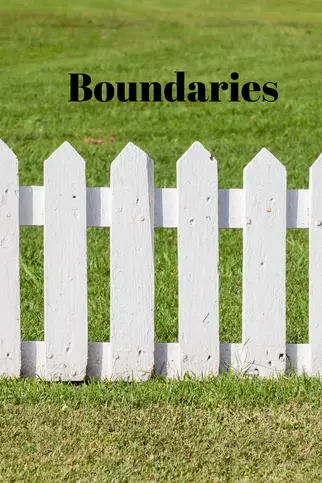
Imagine your life as a house. Boundaries are the fences, gates, and security cameras that keep your space protected. Without them, anyone can waltz into your yard, track mud on your carpet, and raid your fridge. Sound familiar? If so, this blog is for you.
Boundaries are the unsung heroes of healthy relationships and mental well-being. Yet, many of us struggle to set them, me included—or even know where to begin. Here’s your beginner’s guide to understanding boundaries and why they’re essential for living your best life.
What Are Boundaries, Anyway?
Boundaries are the invisible lines that define what you will and won’t accept in your life. They’re like personal rules for how others can treat you, how you treat yourself, and how you spend your time. Think of them as your way of saying, “This is okay with me, and this is not.”
There are three main types of boundaries:
1. Emotional Boundaries
These protect your feelings and mental space. They help you:
- Say no to oversharing or emotional dumping.
- Set limits with toxic people.
- Avoid absorbing others’ emotions like a sponge.
2. Physical Boundaries
These are about your body and personal space. For example:
- Saying, “Please don’t hug me unless I initiate it.”
- Deciding who gets to enter your home.
- Setting rules around physical intimacy and comfort levels.
3. Time Boundaries
Your schedule is sacred. Time boundaries help you:
- Avoid overcommitting to things you don’t actually want to do.
- Protect time for rest, hobbies, or Netflix marathons.
- Set limits on work hours.
Signs You Need Better Boundaries
Wondering if your boundaries need a tune-up? Here are some telltale signs:
- You feel resentful after saying yes to something. (Like when you agreed to dog-sit for your neighbour, and now you’re chasing a Chihuahua at 3 a.m.)
- You’re constantly drained from putting others’ needs above your own.
- You avoid conflict at all costs and end up overextending yourself instead.
- You feel guilty for saying no, even when it’s clearly the right thing to do.
- You struggle to express what you need or want in relationships.
If any of these hit a little too close to home, don’t worry. You’re not alone, and boundaries are a skill you can learn.
Why Boundaries Matter
Setting boundaries isn’t selfish—it’s necessary. Here’s why:
- They improve your relationships. When you’re clear about your needs, it’s easier for others to understand and respect you.
- They protect your mental health. Boundaries reduce stress, anxiety, and burnout by giving you the space to recharge.
- They boost your self-esteem. Enforcing boundaries shows you value yourself and your well-being.
How to Start Setting Boundaries
Ready to put up some metaphorical fences? Here’s how to get started:
1. Identify Your Limits
Take a moment to reflect on what feels comfortable and what doesn’t. If a certain situation makes you want to run for the hills, that’s a clue.
2. Communicate Clearly
Boundaries only work if others know about them. Be direct but kind. For example:
- “I can’t work late tonight; I need to spend time with my family.”
- “I’m not comfortable discussing that topic.”
3. Practice Saying No
It’s a complete sentence. You don’t need to over-explain or apologize.
4. Be Consistent
People might test your boundaries, especially if they’re used to the old you. Stay firm and consistent—you’re worth it.
Final Thoughts
Boundaries are like muscles: the more you use them, the stronger they get. At first, setting boundaries might feel uncomfortable or even scary. But over time, you’ll notice a big difference in your relationships, your mental health, and your overall happiness.
So go ahead, start building your fences. You deserve to protect your peace—and your metaphorical fridge.
Need help setting boundaries or navigating tricky relationships? At True Living Counselling & Coaching, we’re here to support you every step of the way. Let’s chat about how we can help you live a life that feels true to you.